M
EN / ES
M

Culture & Nature thriving together

Followers

Who we are

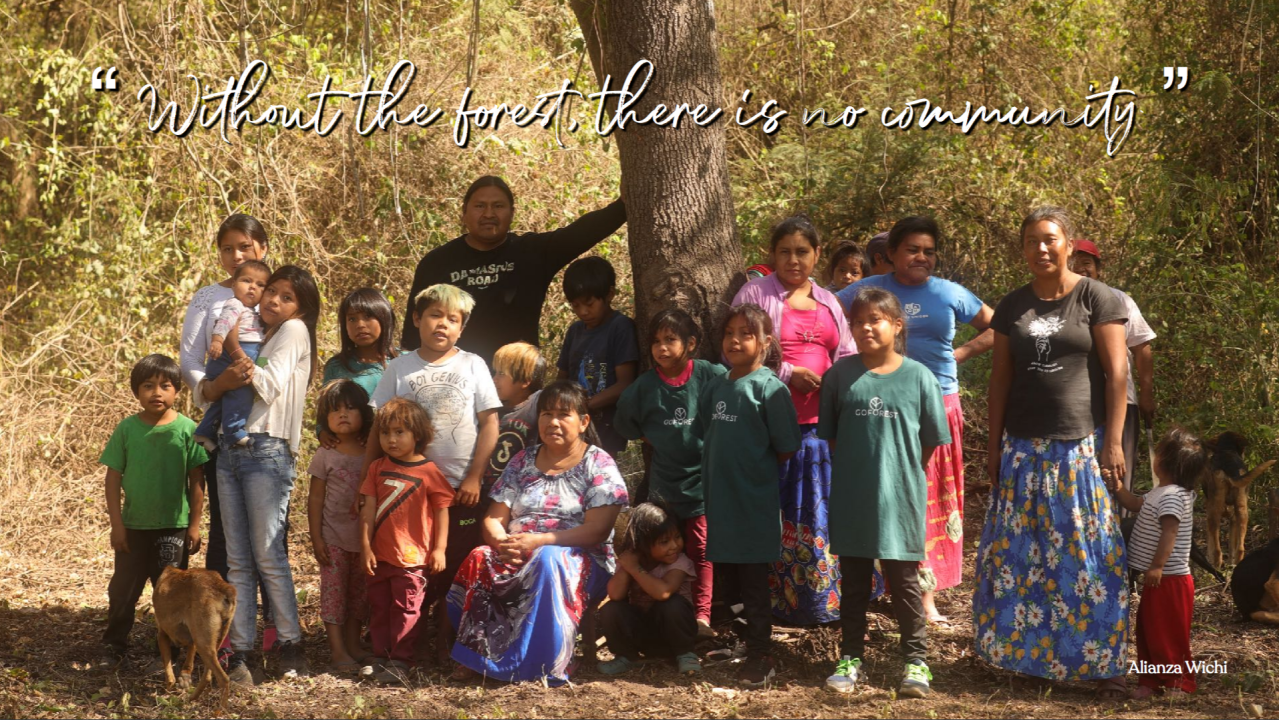
Alianza Wichi is a non-profit organisation based in Spain and Argentina, working in partnership with Indigenous communities in the South American Gran Chaco region. We support regenerative development, the protection and enhancement of biodiversity, the preservation of ancestral knowledge, and the strengthening of cultural identity through collaborative, community-led initiatives.

Our way of working

Our work is based on participatory co-design, bringing together traditional Indigenous knowledge with scientific, legal and technological tools. We promote intercultural collaboration, the revitalisation of native languages and identity, and the training of young leaders equipped to meet contemporary challenges.

We aim to build inclusive, sustainable and resilient communities by integrating local experience with evidence-based planning and multidisciplinary expertise.

Our Work in Numbers

Our Community

Our work in numbers

As we aim to build a resilient network of interconnected communities across the region.

Hectares Protected

Court rulings have secured 690 hectares of Indigenous territory against eviction and deforestation, protecting community rights and native forests.

Native Trees Planted

5 community tree nurseries producing thousands of trees each year hoy enourmous ecological and cultural value to reforest indigneous teeritories.

Communities Impacted

A growing network of Indigenous communities is taking part in projects, training and shared regeneration initiatives across the Gran Chaco.

YOUTH TRAINED

Young Indigenous participants are gaining practical skills in agroforestry, nurseries, restoration and community leadership across the Gran Chaco.

Join us

We can make a difference together

Every donation helps regenerate ecosystems, protect living Indigenous cultures and strengthen communities on the frontlines of the climate crisis. Your support builds essential infrastructure, restores degraded land, safeguards intergenerational knowledge and creates sustainable opportunities for present and future generations.

Our Allies

FAQ

What is Alianza Wichí?

L
K

Alianza Wichí is a biocultural regeneration organisation working alongside Indigenous communities in the Argentine Gran Chaco.

We co-design practical, community-led solutions that connect native forest regeneration, food sovereignty, cultural preservation, youth training, women’s leadership, territorial rights and local autonomy.

Our work is rooted in a simple conviction: the future of the Gran Chaco cannot be designed from outside. It must be built with the people who have lived with, cared for and understood this ecosystem for generations.

Why the name “Alianza Wichí”?

L
K

The name honours the Wichí people, with whom our work began and continues to grow. Over time, this alliance has expanded into a broader intercultural network that includes Wichí, Weenhayek, Chorote, Qom, Nivaclé, Chané, Guaraní and Toba communities across the Gran Chaco region.

The word “alliance” is essential: we do not work for communities, but with them. We build long-term relationships based on trust, listening, reciprocity and shared responsibility.

Where does Alianza Wichí work?

L
K

We work in northern Argentina, mainly in the Gran Chaco and Chaco–Yungas transition areas of Salta Province, including territories around Tartagal, Santa Victoria Este, Rivadavia, the Pilcomayo River corridor and surrounding Indigenous community networks.

The Gran Chaco is not only a forest. It is a living biocultural territory: one of South America’s most important ecoregions, home to extraordinary biodiversity and to multiple Indigenous cultures, languages and knowledge systems.

What makes the Gran Chaco so important?

L
K

The Gran Chaco is the second-largest forest ecosystem in South America after the Amazon. It is a vast dry forest ecoregion with exceptional biodiversity, climate relevance and cultural depth.

It is also one of the most threatened ecosystems on the continent. Deforestation, land grabbing, industrial agriculture, climate change and social exclusion are transforming landscapes and affecting the health, food systems, livelihoods and cultural continuity of Indigenous communities.

For us, protecting the Gran Chaco means protecting forests, water, food, languages, memory and the possibility of a different future.

How does Alianza Wichí work with communities?

L
K

Alianza Wichí grows from relationships of trust with Indigenous communities. We work side by side with leaders, women, elders, youth, and families who are not only partners in the field, but also part of our organisation, our territorial teams, and the living direction of our work.

Every project begins with listening: understanding what each community wants to protect, restore, strengthen, or pass on to future generations. From there, we co-create practical solutions such as native tree nurseries, agroforestry systems, water and irrigation infrastructure, seed recovery, youth training, cultural documentation, legal support, and local livelihood opportunities.

We do not see communities as beneficiaries. We see them as protagonists, knowledge holders, and co-creators of the regeneration already taking root in their territories.

What are the main pillars of Alianza Wichí’s work?

L
K

Alianza Wichí works through an integrated strategy that connects ecological regeneration, Indigenous self-determination, community resilience, and local economic development. Our main pillars are: water and community infrastructure, including safe water, irrigation, housing, community hubs and digital inclusion; food sovereignty, through agroforestry systems, gardens, seed banks, beekeeping and small-scale animal systems; native forest restoration, led by Indigenous community nurseries and reforestation processes; youth education and leadership, training young people as future community technicians and knowledge keepers; Indigenous knowledge and scientific research, documenting and strengthening ancestral ecological practices; legal defence and territorial rights, supporting communities in protecting their land and autonomy; community wellbeing, including sports, cultural continuity and women’s leadership; and economic development, through community-led production, local livelihoods, skills training, regenerative value chains and dignified income opportunities.

These areas are not separate programmes, but parts of one living system: regenerating forests, restoring food and water systems, strengthening culture, creating local economic resilience, and building long-term autonomy with Indigenous communities as co-creators and leaders of the work.

What does “biocultural regeneration” mean?

L
K

For Alianza Wichí, regeneration is not only about planting trees. It is about restoring relationships: between people and forest, food and territory, culture and future, ancestral knowledge and contemporary tools.

A tree nursery can also be a school. An agroforestry system can also be a space of cultural transmission. A seed can carry nutrition, memory, identity and ecological resilience.

That is why we speak of biocultural regeneration: because ecosystems and cultures are deeply connected, and both must be protected together.

What kind of projects does Alianza Wichí develop?

L
K

Alianza Wichí develops integrated, community-led projects that respond to priorities identified together with Indigenous communities. Our work connects ecological restoration, food sovereignty, water access, cultural continuity, territorial rights, and local economic resilience.

These projects include community nurseries for native, fruit, and medicinal plants; agroforestry systems and edible forests; water storage, irrigation, and basic community infrastructure; seed recovery and native species conservation; youth training in forestry, agroecology, communication, and leadership; women-led textile, craft, and cultural initiatives; ethnobiological research and documentation of ancestral knowledge; legal and strategic support for territorial defence; and audiovisual storytelling to strengthen visibility, advocacy, and social impact.

Each project is designed as part of a broader system: restoring forests, improving livelihoods, transmitting knowledge, and strengthening long-term autonomy across Indigenous territories in the Gran Chaco.

What is a community nursery?

L
K

A community nursery is much more than a place where plants are grown. It is a living centre for ecological restoration, education, food sovereignty, cultural transmission, and community autonomy.

In these nurseries, communities produce native trees, fruit trees, medicinal plants, and species used for food, shade, dyes, fibres, crafts, birds, pollinators, and forest recovery. They also strengthen local resilience by creating the skills, seeds, and plant resources that communities need to restore their own territories and reduce dependency on external support.

They are spaces where children, young people, women, and elders share knowledge, build practical skills, and prepare the next generation to care for the forest, sustain local food systems, and lead long-term regeneration from within their own communities.

Why agroforestry systems?

L
K

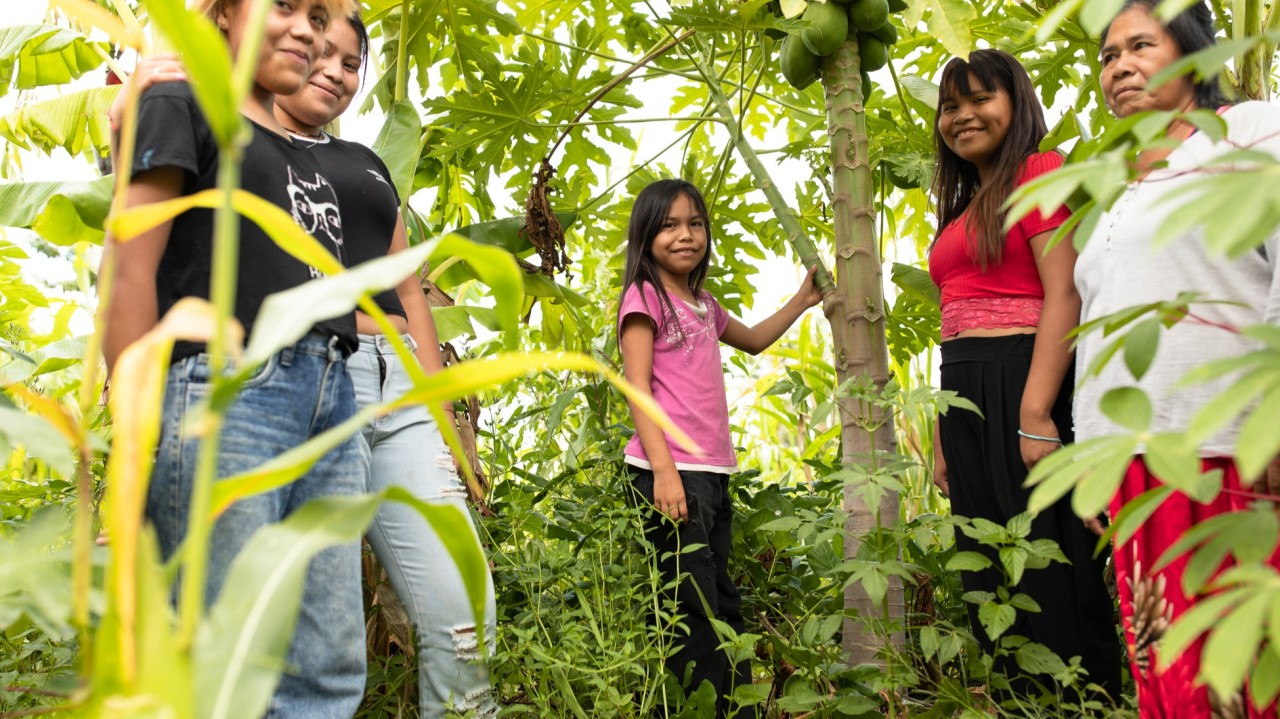
Agroforestry systems allow communities to continue working with the strength of the native forest, rather than replacing it. By combining trees, crops, fruit species, medicinal plants, soil regeneration techniques and local seeds in the same productive space, they create the conditions for a wide diversity of healthy foods to grow within a living ecosystem.

In the Gran Chaco, this approach is especially important because it produces food while restoring soil, shade, humidity, biodiversity and ecological resilience. Once established, agroforestry systems can grow with lower external inputs and less energy-intensive maintenance than conventional agriculture, because they follow the logic of the forest: diversity, cooperation, succession and syntropy.

For Alianza Wichí, agroforestry is not only a food production model. It is a pathway to food sovereignty, climate adaptation, cultural continuity and community autonomy — reconnecting families with forest knowledge while creating healthier, more resilient territories.

Why do we invest in Indigenous youth?

L
K

Because the future of Indigenous territories depends not only on protecting the forest, but on supporting the young people who will care for it, learn from it, and lead its regeneration.

Alianza Wichí works with Indigenous youth so they can become community technicians, forest guardians, agroecology promoters, communicators, researchers, and bridges between ancestral knowledge and contemporary tools. Many of them are already learning by doing: producing trees in nurseries, planting agroforestry systems, restoring native forests, documenting knowledge, supporting irrigation systems, and helping other communities replicate what they have learned.

For us, youth training is not only education. It is a way to strengthen confidence, dignity, cultural continuity, and local autonomy. When young people gain practical skills and remain connected to their elders, their language, and their territory, regeneration becomes something that can grow from within the communities for generations to come.

How do women participate in Alianza Wichí’s work?

L
K

Women are central to community life and to the continuity of Indigenous culture. They are caregivers of seeds, food systems, family health, textile knowledge, local organisation, and everyday forms of resilience. They are also transmitters of culture and wisdom, carrying knowledge about plants, fibres, medicines, stories, language, crafts, and the relationship between community and forest.

Alianza Wichí supports women-led initiatives that strengthen economic autonomy, visibility, leadership, and intergenerational knowledge. This includes textile and craft projects, food production, community nurseries, seed care, cultural documentation, and spaces for training, participation, and collective decision-making.

For us, a gender perspective is not an addition to regeneration. It is part of its foundation. When women’s knowledge, leadership, and voices are strengthened, communities become more resilient, culture remains alive, and new generations inherit not only skills, but a deeper way of caring for life.

How does Alianza Wichí protect ancestral knowledge?

L
K

We support processes that help communities document, transmit and strengthen their own knowledge systems — always through consent, respect and community participation.

This includes oral memory, forest knowledge, medicinal plants, songs, stories, textile techniques, food practices, spiritual relationships with the land and Indigenous languages.

We believe ancestral knowledge is not something from the past. It is a living intelligence that can guide the future.

What does intercultural education mean for Alianza Wichí?

L
K

Intercultural education means creating spaces where different knowledge systems can meet with dignity.

It is not about replacing Indigenous knowledge with external expertise. It is about building respectful bridges between community experience, ancestral wisdom, scientific research, regenerative agriculture, legal tools, communication and technology.

The goal is not assimilation. The goal is shared learning, cultural continuity and stronger community autonomy.

How can I support Alianza Wichí?

L
K

You can support us through donations, institutional partnerships, corporate social responsibility programmes, technical collaboration, communication support, research partnerships or by helping amplify our work.

Every form of support matters when it strengthens community-led regeneration.

How does Alianza Wichí ensure transparency?
L
K

We work with project budgets, implementation plans, field documentation, impact indicators, photographic and audiovisual records, community feedback and regular reporting to donors and partners.

Our accountability is not only financial. It is also relational: we are accountable to the communities we work with, to the territories we help regenerate and to the people who trust us.